Built in the Gaps: How Doug actually works — without the tech jargon
Someone asks me what I’ve built and I say a digital version of Nigel - you know “The Devil Wears Prada Nigel”.
Not because that’s the whole answer, but because “AI agent running on a home server” loses people before I’ve finished the sentence, Nigel doesn’t.
If you’ve seen The Devil Wears Prada you know who Nigel is. Calm, sharp, trusted. The person who knows what needs to happen before you’ve asked. That’s my Nigel.
What follows is what Nigel — and the rest of the system — actually does. No jargon.
The morning.
Every morning Nigel sends me three things on Telegram before I’ve sat down (actually gotten out of bed if I’m honest).
First is the brief. What’s in my day — calendar appointments, commitments I’ve made that are due, anything overdue that needs attention. Some prioritisation based on what’s been sitting longest or what’s important. Weather too, which sounds trivial until you’re walking into a client meeting underdressed.
Second is a news summary on whatever I’m tracking. Right now that’s the war in Iran — what happened overnight, points worth noting, links if I want to go deeper. I don’t always. But it’s there and it’s current.
Third is the trading update. Where my holdings are, any relevant news attached to them. No pressure to act. Just the picture.
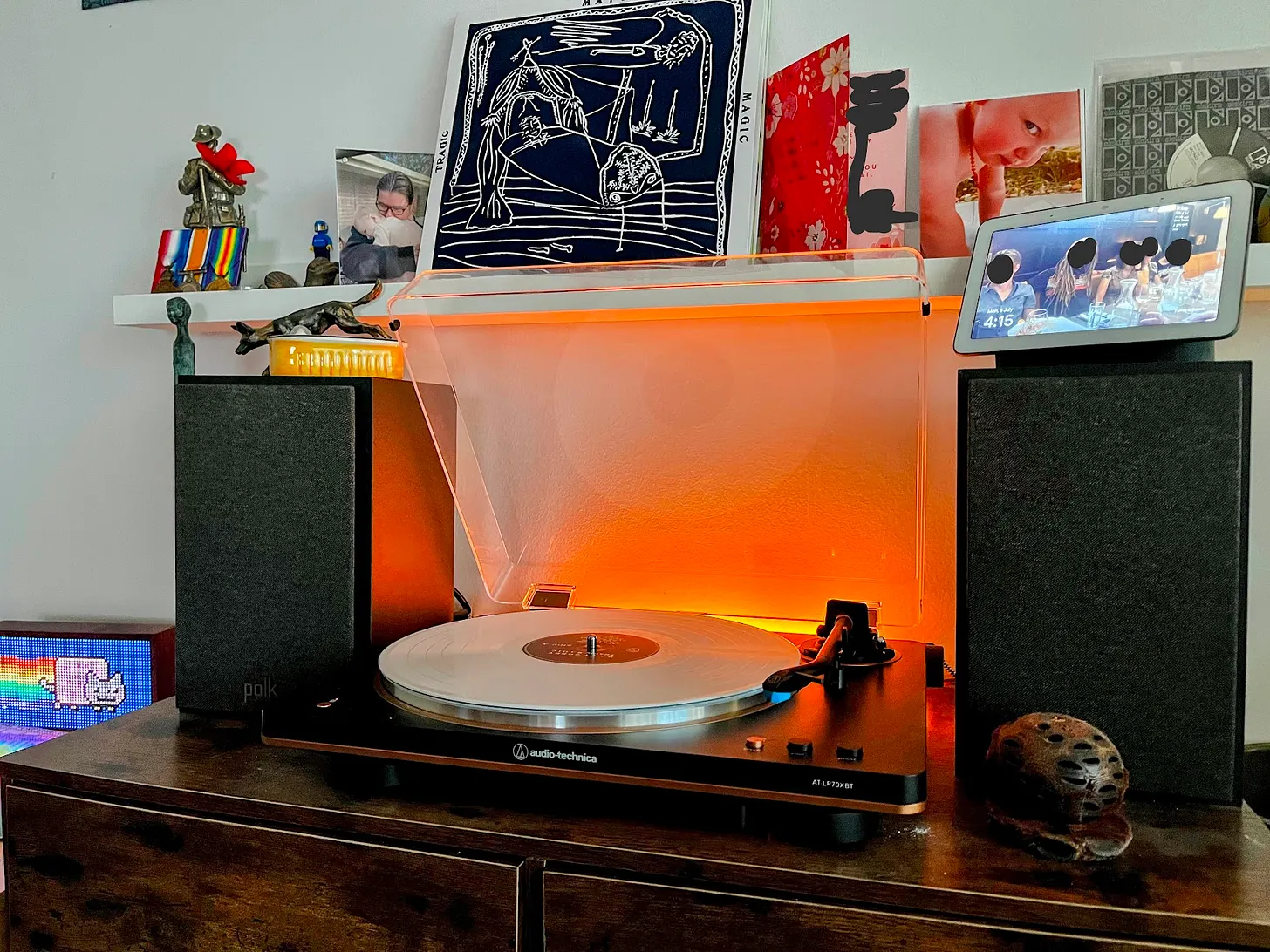
Then I get to my desk. Put a record on. Open NexBoard — my dashboard — and that’s where the fourth thing lives. Open commitments, the Kanban board with everything in flight, calendar appointments I can convert into a focused sprint. It’s not pushing at me the way Telegram does. It’s just there when I’m ready.
That’s the morning. Informed before I’ve opened a single app deliberately.
So, who or what is Doug
Doug is a small desktop computer sitting in my office - where Nigel lives. No cloud subscription, no monthly fee, no data leaving the house. Just a machine that runs twenty-four seven on Linux — the same operating system that runs most of the internet, which tells you something about how stable it is.
On top of that I’ve built a series of software programs, most of them open source, some written by me with Claude’s help. They talk to each other. They talk to my calendar, my email, my trading data, my vault of notes. They run on a schedule, or they run when triggered, or they wait to be asked something.
Doug doesn’t think. He connects. The intelligence comes from the AI models he calls when he needs to work something out. What Doug does is hold everything together, run the pipes, and make sure the right thing gets to the right place at the right time.
Someone described it to me recently as a switchboard operator — and that’s closer than anything I’ve come up with. The tools most people use every day already exist. Calendar, email, documents, spreadsheets, websites, databases. What Doug does is connect them. Logically, securely, in the way I want to work rather than the way each app was designed to work in isolation.
Data!
One thing worth flagging for anyone thinking about building something like this: don’t let your data get trapped.
Everything at the core of my system uses plain text. Notes, tasks, commitments, agent outputs — all of it sits in files I can open with any text editor on any computer. No proprietary format, no subscription required to access what I’ve written.
The main tool is Obsidian. I’ve used it for about eight years. It uses markdown — plain text with simple formatting annotations. A hash symbol makes a heading. An asterisk makes something bold. That’s it.
If I ever want to move, change tools, or build something new on top of my notes, I can. Everything is mine in a format that will outlast any particular app. That’s not a technical detail. It’s a decision about who owns your data.
What is stopping mass adoption?
The honest reason most people aren’t doing this yet isn’t fear of technology. It’s the language used to describe it.
There are some costs, but very manageable in our subscription heavy world - my advice - if you want to play, drop one of your streaming services you rarely use - use that $15month and buy a Claude subscription.
“Developer. Agentic. Python. API key. MCP.”
These are useful terms if you’re building the thing, but they’re still close enough to the machinery that most people switch off before they understand what it actually does.
That gap has closed before.
The spreadsheet did it first. VLOOKUPs, pivot tables, external data connections — genuinely complicated underneath, but Excel buried it behind a familiar interface. Millions of people built financial models without needing to know what sat underneath.
Then the iPhone. Cellular networks, GPS, app sandboxing — none of it visible. Just a green button.
This feels similar. The capability is ahead of the interface.
For people who are curious enough to try now, all the information is there. Most of what I’ve learned came from YouTube, forums and trial and error. Nothing is lost when you try something and it doesn’t work. You fix it and keep going.
That’s how this gets figured out.
The single most important skill right now isn’t coding, data science or anything particularly technical.
It’s being able to describe what you want. (AKA the prompt)
How much context you provide. How clearly you explain the outcome you’re after. How specific you’re willing to be.
People who get good at that, regardless of their technical background, will get more value out of these tools than people who focus only on the technology itself.
The morning brief is useful. But it lands in a chat window and disappears the moment the next message arrives. What I needed was somewhere permanent — a single view of everything that mattered, updated in real time, that didn’t require me to go looking for it. That’s NexBoard. Next issue.
Comments